

Against the backdrop of the global fight against climate change and the pursuit of sustainable development, energy transition has become a top priority. Hydrogen energy is a clean, low-carbon, flexible, and efficient energy source that has an indispensable alternative role to play in promoting the decarbonization of the global economy, especially in the industrial and transportation sectors. Simply understood, the chemical energy produced by the reaction between hydrogen and oxygen is hydrogen energy. As a clean energy solution with great potential, hydrogen energy technology is gradually becoming a focal point in the energy sector, playing a crucial role in driving the energy transition.
Hydrogen's unique advantages: clean and efficient with a wide range of sources
Hydrogen energy, as a clean, efficient, and sustainable energy carrier, has several unique advantages. Firstly, its combustion product is only water, which is environmentally friendly as it does not produce greenhouse gasses - carbon dioxide. Secondly, hydrogen energy has a high energy density and can provide powerful power support for various applications. Furthermore, hydrogen energy comes from a wide range of sources and can be produced in many ways, including renewable energy power, electrolysis of water, fossil energy reforming, etc.
Change in transportation: the rise of hydrogen fuel cell vehicles
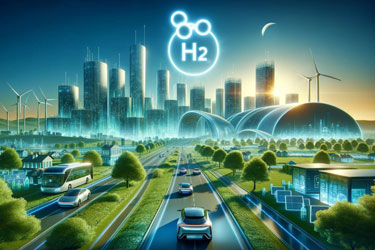
In the process of energy transition, the application scenarios of hydrogen technology are becoming more and more extensive. In the transportation sector, hydrogen fuel cell vehicles are emerging. Compared with traditional fuel vehicles, hydrogen fuel cell vehicles have the advantages of zero-emission, short refueling time and long-range, etc. They are expected to gradually replace some of the fuel vehicles in the future, and reduce carbon emissions in the transportation sector. In addition, hydrogen energy can also be applied to rail transportation, ships, and other fields to promote the green development of the entire transportation industry.
Energy storage advantage: solving the problem of renewable energy
Hydrogen energy also shows significant advantages in energy storage. Renewable energy sources such as wind and solar energy are characterized by intermittency and instability. Hydrogen produced through the electrolysis of water can store excess electricity and release energy when needed through fuel cells or combustion power generation, thus effectively solving the problem of renewable energy consumption and improving the stability and reliability of the energy system.
Expanding industrial applications: reducing carbon emissions and energy diversity
The industrial field is also an important application direction of hydrogen energy technology. For example, in iron and steel, chemical, and other industries, hydrogen can replace traditional fossil fuels for high-temperature heating, reduction reactions, and other processes to reduce carbon emissions in the industrial production process. At the same time, hydrogen can also support distributed energy systems to meet the diversified demand for energy in factories, communities, and so on.
Future development trend: promoting the transformation of the energy system
At present, the cost of hydrogen energy is relatively high, especially the technology of hydrogen production through renewable energy still needs to be further optimized and cost reduction. In addition, there are technical difficulties in storing and transporting hydrogen, requiring the development of more efficient, safe, and economical hydrogen storage and transportation technologies. Meanwhile, the construction of hydrogen refueling infrastructure is still relatively lagging, restricting the widespread application of hydrogen energy. In the future, we are expected to see the emergence of more efficient and low-cost hydrogen production technologies, breakthroughs in hydrogen storage and transportation technologies, and large-scale construction of hydrogen refueling infrastructure. Meanwhile, international cooperation and exchanges will further promote the development and application of hydrogen energy technology and accelerate the pace of global energy transition.
Hydrogen energy technology has an irreplaceable position and role in the energy transition. Scaling up clean hydrogen energy is likely to bring about intense geo-economic competition, facilitate the formation of new alliances and cooperation, and generate new power nodes with future centers of hydrogen energy production and use. Through sustained innovation and efforts, hydrogen energy is expected to become an important component of the future energy system and make a significant contribution to the realization of global sustainable development goals.
Disclaimer: Mention of any brand or trademark is for identification purposes only and does not indicate any partnership or endorsement.
